






Protection of People from Material Handling Equipment
The movement of people and material handling equipment in the same area is one of the biggest safety risks in warehouses and production facilities. The key is to separate pedestrian routes from equipment traffic lanes, clearly define crossings, and protect places where contact between a person and a truck or load may occur. We will design and deliver a combination of elements so that the solution works in real operation and does not unnecessarily limit logistics.


Where collisions between pedestrians and material handling equipment happen most often
Collisions occur most often in places where routes intersect, visibility is reduced, or people enter handling areas. The safety system is designed to naturally force slowing down, guide movement along the route, and create controlled and safe passage.
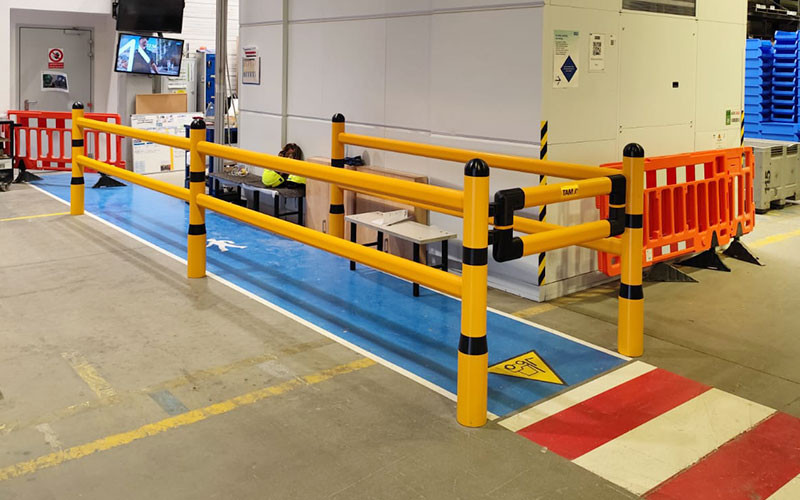
intersections of pedestrian routes and forklift traffic lanes (crossings, “gate points”)
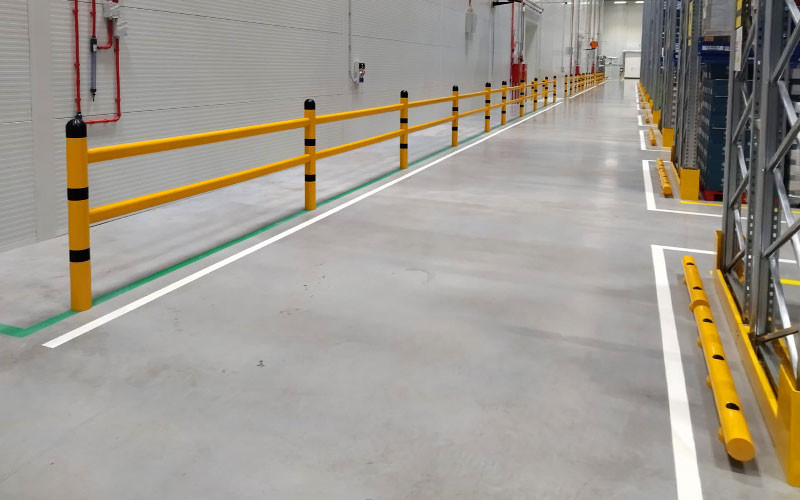
entrances to rack aisles and handling zones

blind corners, aisle exits, areas with reduced visibility

operator stations near traffic lanes

docks, ramps, operator areas for loading and unloading

precisely defined pedestrian walkways along logistics routes
What can happen when a person and a forklift meet
It is not just about scratches on equipment. In an environment with forklifts, even a small moment of inattention can mean serious injury, damage to the load, and operational downtime. That is why, in shared zones, physical separation of routes and paths (railings/barriers), supplemented with controlled crossings and clear definition of the whole area, is recommended.
Worker safety
Risk of collision with the truck, being trapped between the truck and a structure, or being struck by the load. In mixed zones, the most effective solution is to physically prevent contact – with a barrier and controlled entry.

Damage to property and goods
Collisions near pedestrians often mean impact into racking, columns, machinery, or falling goods. The consequences are more expensive than they seem at first glance.

Operating costs and downtime
Incident investigation, operational restrictions, rerouting, substitute work, and servicing. Prevention through route design and barriers is usually cheaper than repeatedly “dealing with the consequences”.
How we design pedestrian zone protection
A safety solution is not a single product. It is a combination of elements based on operation, equipment speed, traffic lane widths, and the number of crossings.

1. Effective operational analysis
type of equipment, speeds, crossings, pedestrian frequency, narrow points

2. Identification of risk zones
route intersections, blind corners, aisle entrances, workstations near traffic lanes

3. Proposal of the protection combination
railings to separate routes, safety gates, column protection, supplementary elements
4. Installation and operational recommendations
marking, route guidance, crossing rules, improved visibility
 Products button anchor
Recommended BAM I BARRIER
products for protecting people
Below are typical elements that are combined in operations. The goal is to protect people and guide equipment movement without unnecessarily restricting logistics.
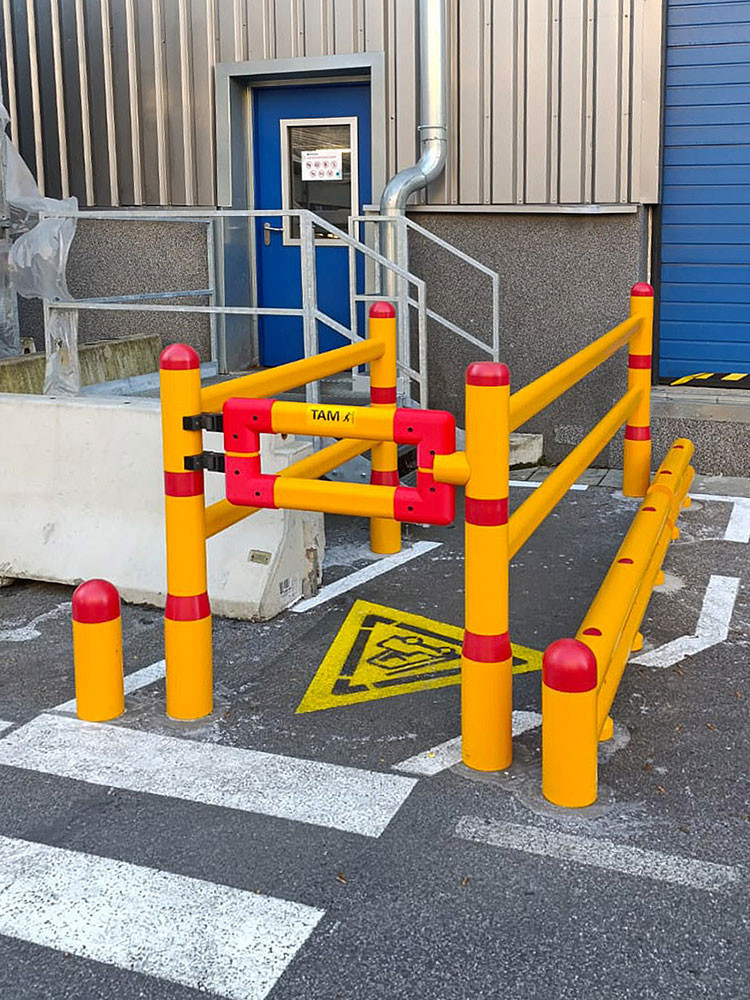
Safety gates for controlled crossings and entry into risk zones
The riskiest places are crossings and entrances to areas where forklifts operate. A safety gate creates a controlled point – a person must slow down, stop, and consciously enter the zone. This “forced stop” is one of the reasons why gates are used at crossings and entrances to defined routes.
Benefits:
- clearly defines the crossing / entry into a forklift zone
- naturally increases attention and reduces “shortcuts”
- easy to combine with railings and route guidance
- suitable for warehouses, production areas, and logistics corridors
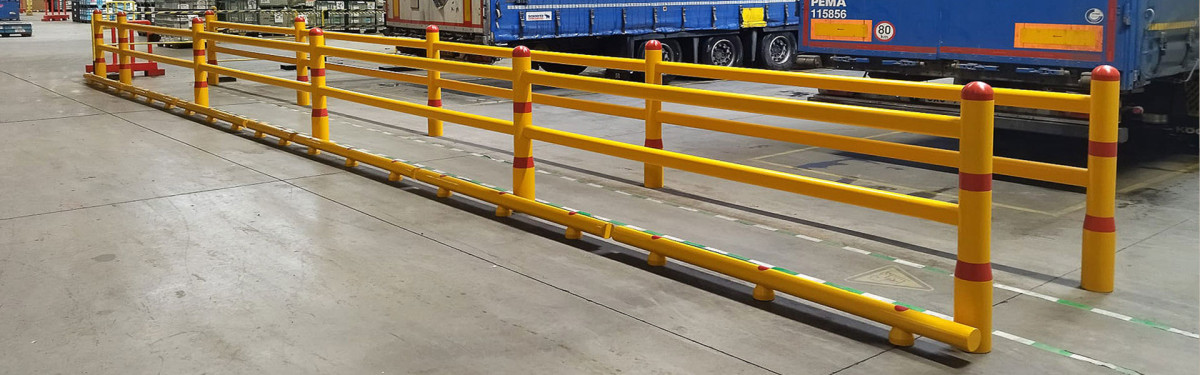
Safety railings to separate pedestrian routes from material handling traffic
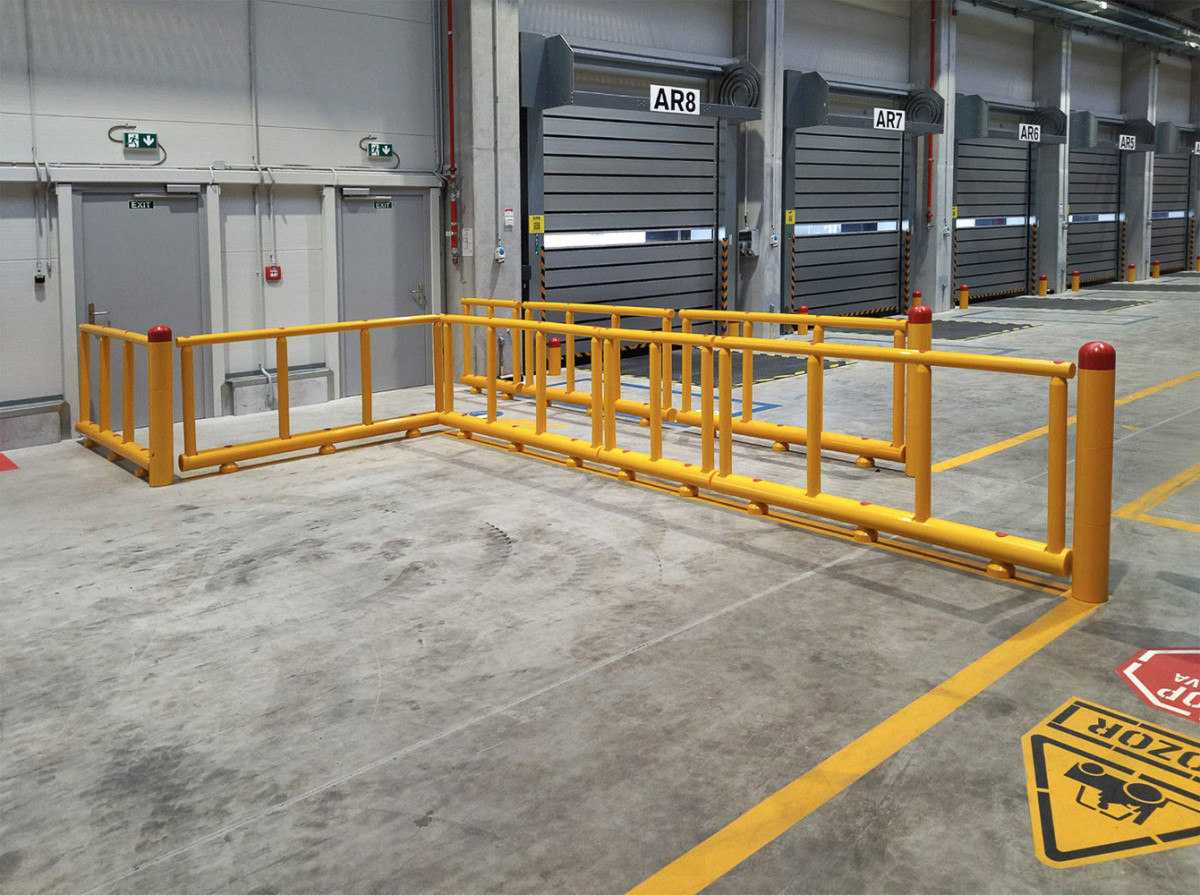
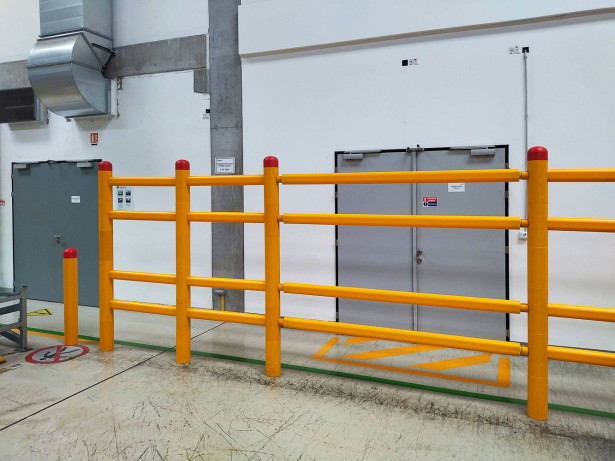
Railings are the basis for creating a safe pedestrian route – they physically separate the walkway from forklift traffic and prevent pedestrians from “ending up in the driving path”.
Different height variants make it possible to provide both light route guidance and higher protection in more demanding zones.
When it makes sense:
- pedestrian corridors along racking / walls
- workstations near traffic lanes (packing, inspection, order picking)
- long straight sections where there is a risk of “driving out” of the path
Enhanced protection where there is a risk of contact with the load or higher impact energy
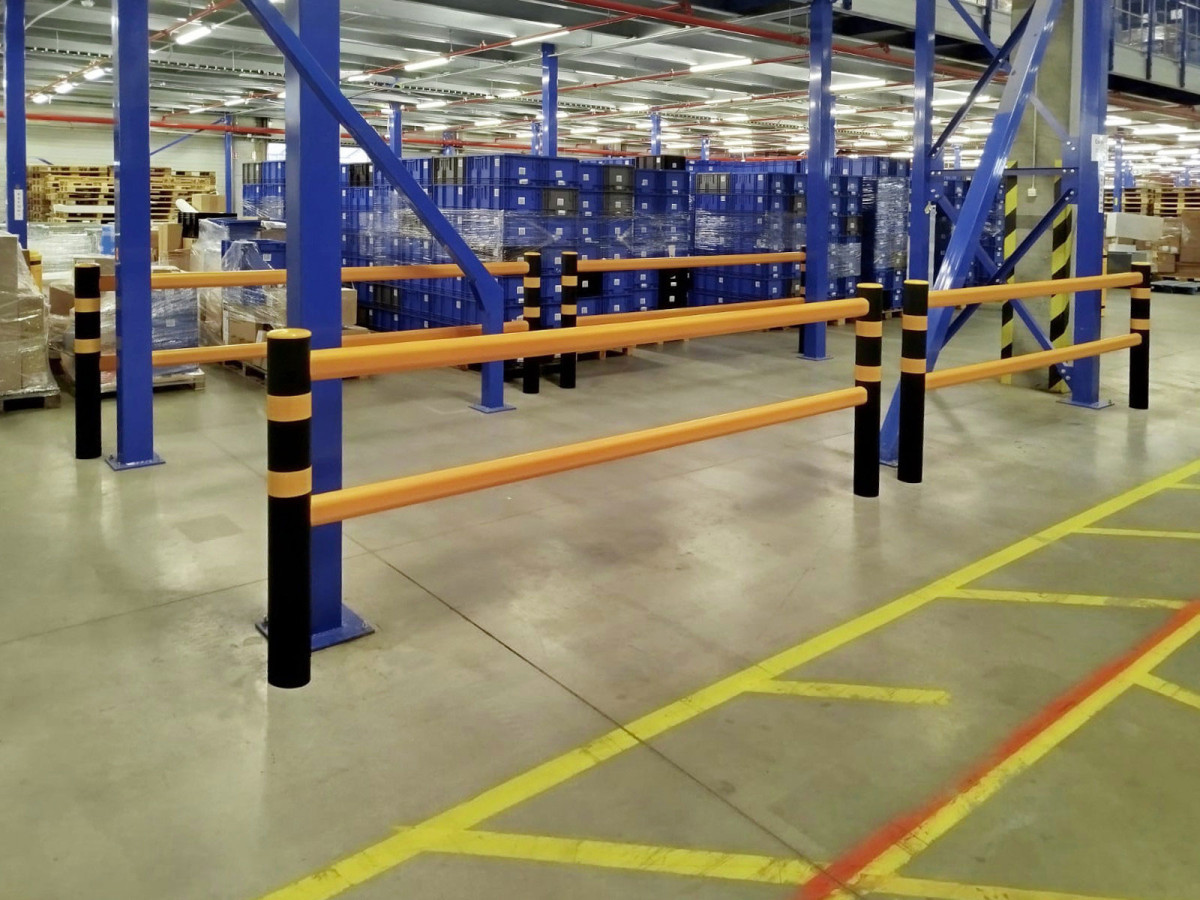
In areas with higher risk (faster traffic, wider equipment, handling higher pallets, or stacked pallets), it makes sense to use elements with an increased structure. They help protect not only infrastructure, but also people near the operation.
Protection of columns and corners in pedestrian movement areas
Columns near crossings and pedestrian routes are typical “hard obstacles”. A forklift impact into a column can have serious consequences – which is why these points are protected separately and often as a priority.
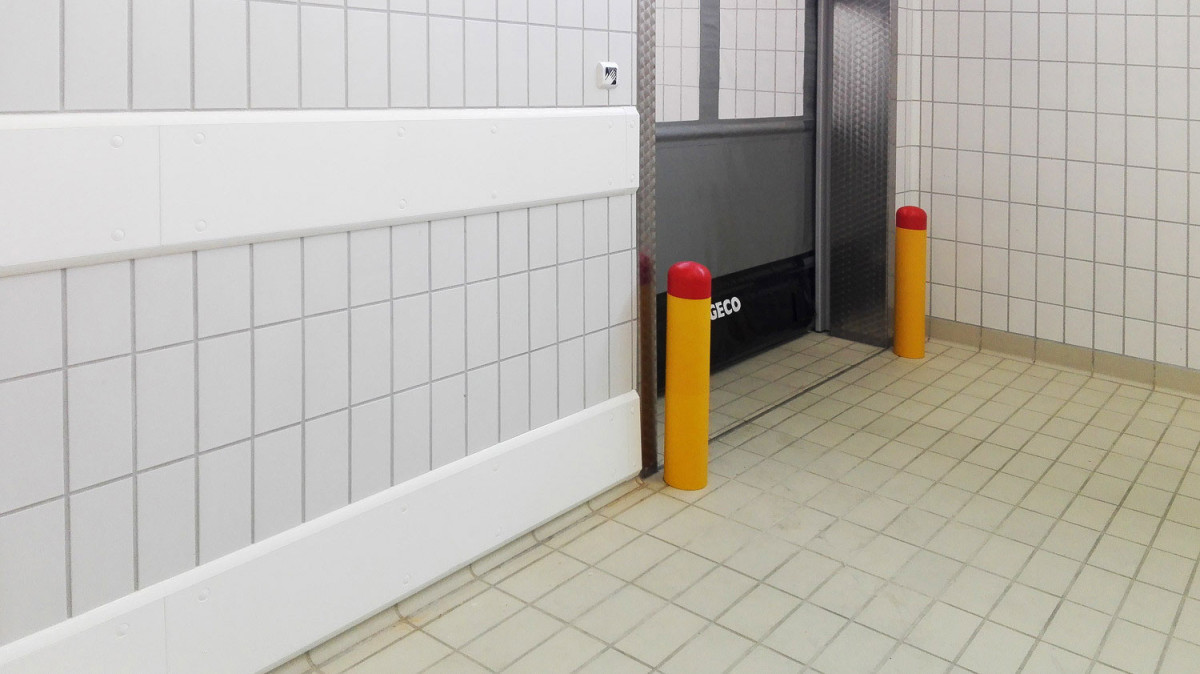
Protective panels for places where handling equipment and pallets move along walls
When handling equipment moves along walls (for example in a corridor), repeated contact often occurs. Panels protect surfaces and help keep the environment safe and clean (including hygienic operations).
Why floor marking alone is not enough
Marking is important, but in real operation pedestrians are in a hurry, they take shortcuts, and trucks are manoeuvring. That is why in areas where routes intersect and traffic is common, a physical barrier (railing) is commonly used, supplemented with gates at crossing points
Route separation
physically defines the pedestrian zone and does not allow “accidental entry” into the traffic lane
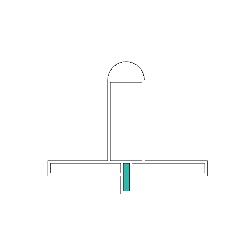
Controlled crossings
a gate creates a natural pause and a conscious decision to enter the crossing
Layout design + installation
it is not enough just to buy a barrier – placement based on real routes is what matters (crossings, corners, exits)
How to choose the right protection for people
Start with these questions – they will quickly help determine where physical separation is needed and where a controlled crossing is necessary.
How many crossings are there in the warehouse and where do routes intersect?
Are there any blind corners or aisle exits leading into a pedestrian zone?
Where do people most often take “shortcuts” through the logistics area?
Is it necessary to protect workstations near traffic lanes (packing, inspection, picking)?
What type of equipment operates in the area (forklift / reach truck / tugger train) and what is the frequency?
RECOMMENDATION BAM I BARRIER
Most often, protection starts with separating pedestrian routes with railings, followed by safety gates at crossing points. Critical points (columns / corners) are addressed with separate protection.
Practical example:
Safe crossing between a workstation and a storage aisle
In one operation, there were frequent intersections of pedestrian traffic and forklifts in a place where employees walked to a workstation near the packing line. The solution was to define the pedestrian route using safety railings and create one controlled crossing with a gate, preventing shortcuts and ensuring that pedestrian movement took place only at the defined point.
Result:
safer and clearer pedestrian movement in the area
reduced risk of entering the forklift driving path
smoother operation thanks to clearly guided routes
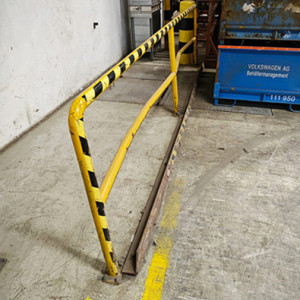
Unsuitable original condition
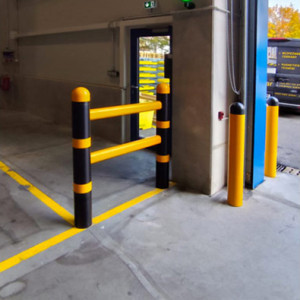
Correct solution BAM I BARRIER
Frequently asked questions
Is a gate necessary even where a crossing is already painted on the floor?
If pedestrians and forklifts cross frequently at that location, marking alone is not enough. A gate creates a controlled point and increases attention when entering the crossing.
Will railings reduce passability?
A properly designed solution respects lane widths and turning radii. The goal is to separate routes without unnecessarily “narrowing” traffic flow.
Is it possible to install protection during operation?
In most cases, yes. The procedure is chosen so that the impact on operation is as small as possible (in stages, outside peak times).
Where should we start if the budget is limited?
Usually the greatest effect comes from:
1) separating the busiest pedestrian corridor,
2) securing the riskiest crossing with a gate,
3) adding protection for columns / corners.
How do we determine the correct layout?
A floor plan, photos, and a brief description of the routes will help. Ideally, a short operational analysis and a proposal of the element combination based on real “hot spots” should be prepared.


