






Protection of hall structures and walls against impact
Columns, corners and hall walls are typical “hard points” that material handling equipment hits during manoeuvring, replenishment and movement through corridors. Damage to the structure or cladding may mean costly repairs, operational restrictions and in some cases even a safety risk for people. We will design protection for critical points so that it withstands day-to-day operation and minimises damage and downtime.


Where structures and walls suffer most often
Impacts on structures do not occur only during an “accident”. They are often repeated contacts while reversing, approaching a gate, turning around corners or passing through a narrow corridor. That is why it makes sense to protect mainly the places where equipment moves regularly and where space is limited.

columns at passageways, aisles and route crossings

wall corners and passages between spaces in corridors

walls along logistics routes and corridors

gates, staging areas and entrances into the hall

narrow profiles – technical routing, racks, structures
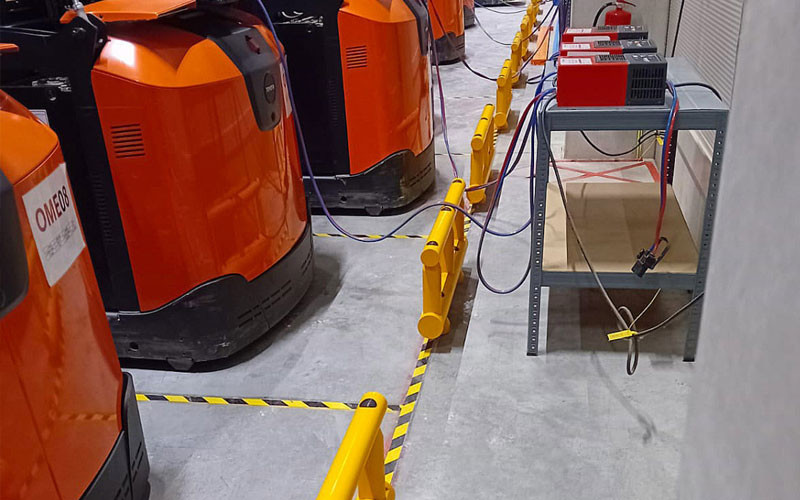
charging stations, docks and ramps where handling takes place in tight spaces
What is at risk when structures and walls are damaged
The hall structure is the foundation – its damage cannot be solved by a “quick part replacement”. Repairs are usually costly and may restrict the operation of the entire zone.
Safety and structural integrity
Impacts on columns and load-bearing parts may endanger the load capacity of the structure and people’s safety. In many damage cases, expert and structural assessment is required, including specialist and costly repair.

Damage to the building and infrastructure
Damaged cladding, gates, portals or walls mean repairs, reduced service life and often also lower cleanliness and hygiene in operation.

Downtime and costs
Repairing structures and building parts usually means restrictions on equipment movement, temporary corridor closures and downtime.

How we design protection for halls and walls
For structures, it works best to combine two approaches: protect the critical point (column, corner, gate) and at the same time guide the equipment route so that it does not reach the point outside the safe clearance profile.

1. Operation analysis
equipment routes, traffic widths, turning radii, speeds
2. Identification of critical points
columns, corridor walls, spaces around gates and corners

3. Design of the element combination
column protection + panels + guardrails/barriers + passage protection
4. Installation and fine-tuning
markings, mirrors, approach adjustments, route guidance
 Products button anchor
Recommended BAM I BARRIER
products for protecting structures and walls
The best results come from a system solution: protection of columns, gates and corners + protection of walls in corridors + guidance of the equipment route.

Protection of hall columns in material handling equipment routes
A column is a typical “impact point”. Column protection creates an impact zone and helps prevent direct contact between the truck and the structure. Especially suitable near passageways, exits from aisles and in places with higher traffic intensity.
Benefits:
- protection of load-bearing points and critical infrastructure
- suitable for blind corners and route crossings
- quick effect in places with repeated contact
Height impact barrier for protecting gates, piping and overhead installations
Not all hall damage is caused by impact against a column or wall. In warehouses and production halls, damage to overhead equipment is common – for example when driving with raised forks, a high pallet or during handling in passageways. The main items at risk are industrial gates, ventilation ducts, cable routes and other technical installations that are expensive to repair and whose failure may limit operation.
Where it makes the most sense:
gate passages and gate portals (protection of lintels and gate systems)
corridors with overhead installations (HVAC ducts, utilities, cable trays)
zones with frequent handling at height (reach trucks, forklifts, high pallets)
places with critical links to safety systems (e.g. sprinkler piping)


Guardrails for route guidance and wall protection
If equipment repeatedly travels along a wall, the best combination is: panels protect the surface and guardrails keep the truck within a safe profile. Guardrails can also be used as a “guiding” element that reduces manoeuvring and the risk of contact.
Protective panels for walls and corners in corridors
Repeated “scrapes” and impacts from loads often occur along walls in logistics corridors. Panels protect the cladding and help keep the walls in good condition – often even where a standard barrier would be too bulky.
When to use:
- narrow corridors along walls
- places where turning with a load happens in a tight profile
- hygienic operations (easier maintenance of surfaces)


Height warning barrier for protecting structures and gates against high loads
In halls and warehouses, damage is often caused not only by a truck hitting a column or wall, but also by a high load (raised forks, a high pallet, an extended load) contacting gate portals, lintels, piping, cable routes or low structures. This typically occurs when entering a passage, in narrowed places and when the load height changes while driving.
A height warning barrier creates a simple and effective “first contact” – before the structure itself is damaged. If equipment approaches with the load at the wrong height, the barrier warns the operator (audibly / by mechanical contact) and helps prevent costly repairs to gates, building parts and technical utilities.
Where it makes the most sense:
- entrances to the hall and gate passages (protection of portals and lintels)
- corridors with low elements (piping, cable trays, sprinklers, ventilation)
- places with a narrowed profile or limited visibility
- zones with frequent handling at height (reach trucks, forklifts, high pallets)
Why it pays to protect structures physically
Building repairs are expensive and restrict operation. Physical protection of critical points reduces the number of incidents and repeated contacts, protects load-bearing and building parts that are difficult to repair, and helps keep corridors clean and passageways safe.

Protection of columns and load-bearing points

Protection of walls and corners in corridors
Route guidance for equipment = fewer impacts
How to choose protection for structures and walls
If you are not sure, start with these questions. They will help quickly determine which places to protect first.
Where do repeated impacts occur (columns / corners / gates / corridor)?
Is the problem in manoeuvring (turning, reversing) or in driving through a narrow profile?
Is it enough to protect the surface (panels), or is route guidance needed (guardrail)?
Does it make sense to protect the passage with a robust barrier?
Is there also pedestrian movement in the place (add gate / separation)?
RECOMMENDATION BAM I BARRIER
Start with columns and corners in the busiest corridors. Then add wall panels and guardrails as route guidance so that contact does not repeat.
Example from practice:
Corridor along a wall with columns and a narrow profile
In the corridor along the wall, repeated contact occurred during passage with loads. The corners and the column at the aisle exit suffered the most. The solution was column protection, protective wall panels and route guidance with guardrails so that the trucks kept a safe distance from the wall.
Result:
less damage to cladding and corners
reduction in maintenance interventions
smoother and safer passage
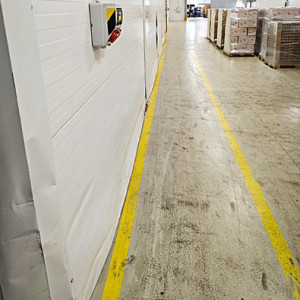
Unsuitable original condition

Correct solution BAM I BARRIER
Frequently asked questions
What should be protected first?
Columns at passageways and corners in the busiest corridors – that is usually where the fastest return comes.
Are panels enough, or do I also need guardrails?
Panels protect the surface, guardrails guide the route. If contact repeats, a combination of both is often more effective.
Will the protection get in the way in the corridor?
The design must respect the width of the traffic route and the turning radius of the equipment. The goal is to reduce manoeuvring, not make it harder.
Can it be done in stages?
Yes – typically the worst “hot spots” are addressed first, and systematic route guidance is added gradually.


