






Protecting warehouses and racking from forklift truck impacts
Forklift impacts on racking are among the most common causes of damage in warehouses. They threaten the stability of the racking structure, people’s safety, and the smooth flow of operations. We will help you choose and properly position protective barriers so that your racking withstands daily operation and minimizes damage and downtime.


Where racking impacts happen most often
Contact with racking usually does not happen "at full speed", but during manoeuvring – entering an aisle, turning, and placing a pallet. Even a smaller impact adds up over time and can gradually damage uprights, footplates, or the rack anchoring to the floor.
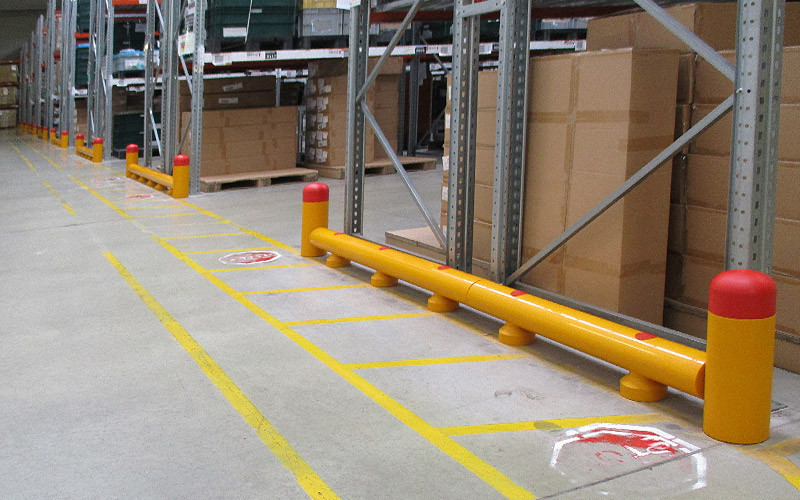
aisle entrances and aisle exits
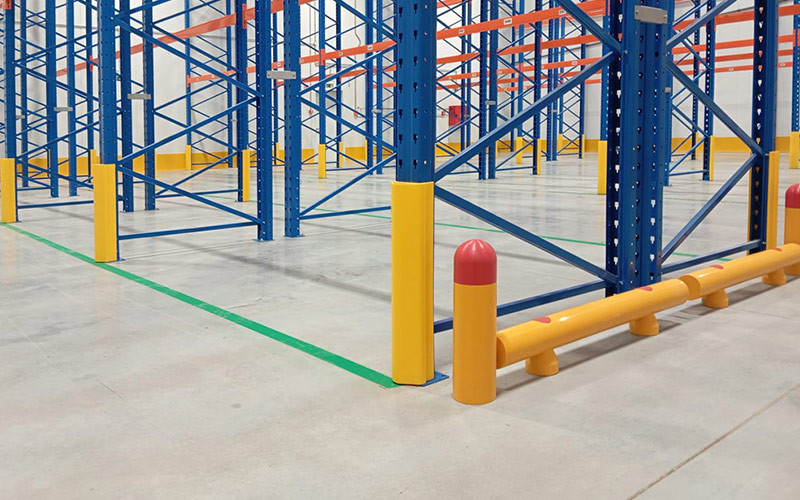
rack legs near passageways and narrow profiles
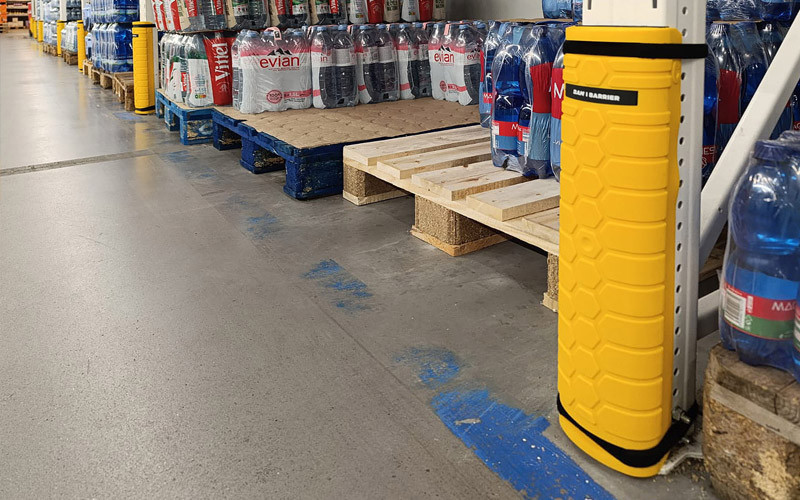
handling during pallet placement
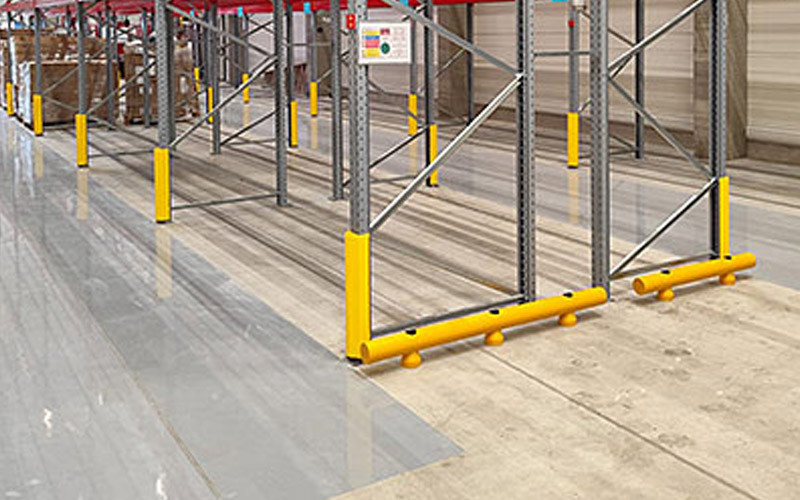
route intersections, blind corners, and areas with reduced visibility
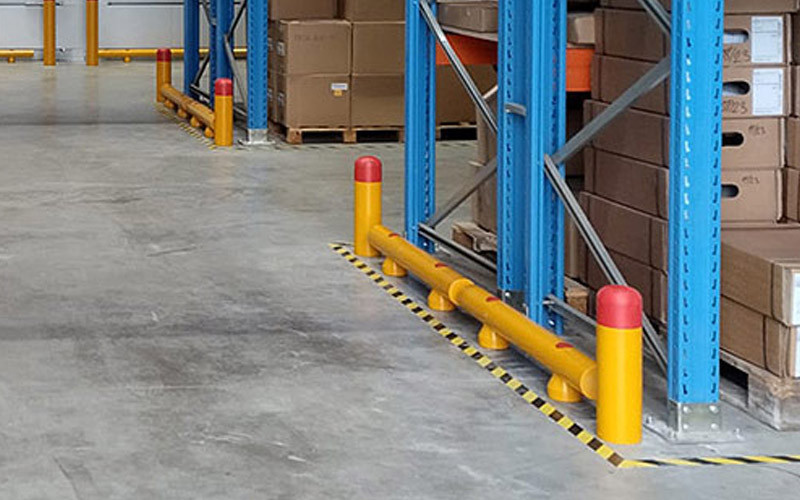
rack ends ("end-of-aisle") – the most exposed area
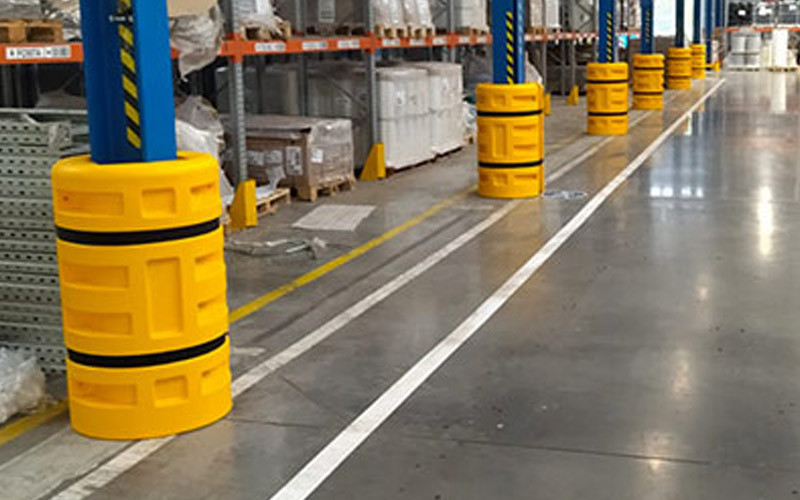
peak operation times and increased material-handling traffic
What can happen when a rack is hit
It is not just about "bent sheet metal". A damaged upright or footplate means a higher risk of goods falling, costly repairs, and sometimes the shutdown of part of the warehouse.
Worker safety
An impact on racking can cause goods to loosen or fall and put warehouse workers at risk. Combined with higher rack loads, the risk of a chain reaction also increases.

Damage to property
Rack damage often leads to damage to pallets, goods, and equipment. Repairs and replacements become more expensive when the problem repeats and the right area is not protected.

Operating costs and downtime
An aisle shutdown, rehandling of goods, and rack servicing all cost time and money. Prevention using barriers is typically cheaper than repeatedly dealing with damage.
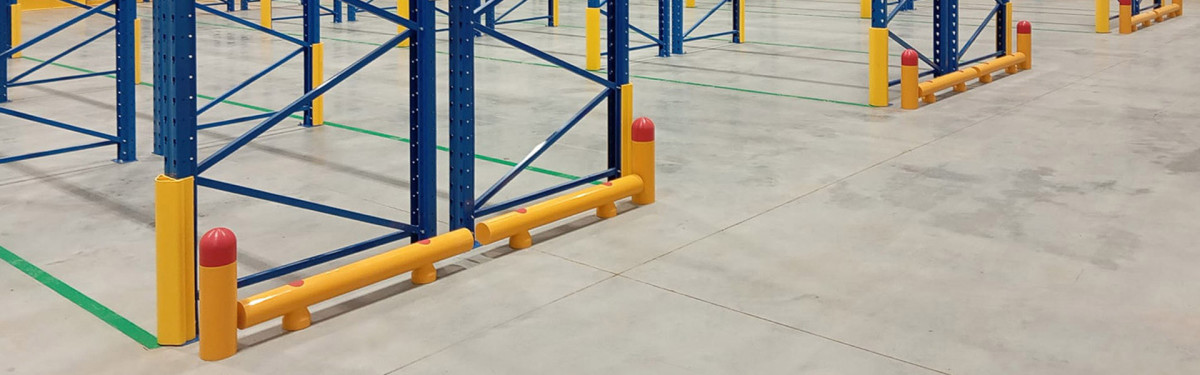
How we design rack protection
The right rack protection is not one product, but a combination of elements based on the operation. A warehouse with narrow aisles and reach trucks will require a different solution than a warehouse with fast forklift traffic and frequent route crossings.

1. Quick operational analysis
type of equipment, aisle widths, speeds, critical points

2. Identification of risk zones
rack ends, rack legs, columns, passageways, intersections

3. Design of the protection combination
end barriers, leg guards, column protection, guide railings
4. Installation and recommendation of operational measures
marking, route guidance, improved visibility
 Products button anchor
Recommended BAM I BARRIER
products for rack protection
Below are the typical elements commonly combined in warehouses. We always adapt the selection and layout to the real operation – the goal is to protect the rack without unnecessarily restricting passage.
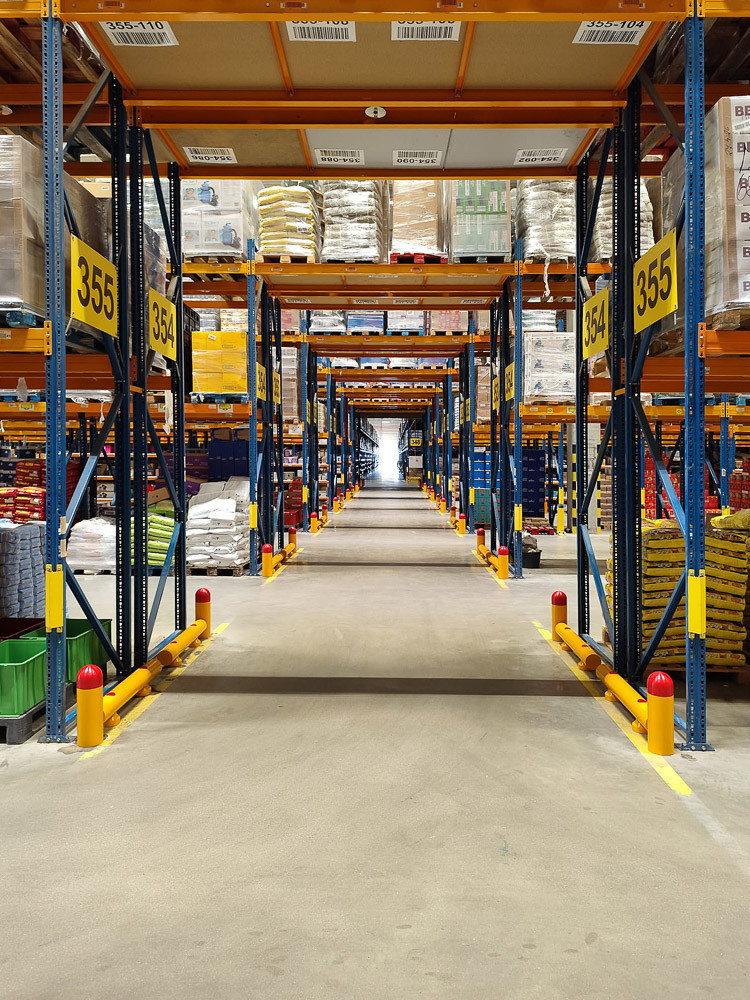
Protection of rack ends (end-of-aisle)
Rack ends are the most frequently hit areas – this is where the truck enters the aisle, turns, and places the pallet. Even relatively small impacts add up over time and can damage the uprights as well as the geometry of the rack bay.
Rack end protection creates a solid barrier between the truck and the rack. It helps prevent deformation of the rack structure and reduces the risk of falling goods and costly repairs.
Benefits:
- protects the most exposed point of the rack aisle
- suitable for warehouses with high forklift traffic intensity
- supports the long-term stability of the racking system
- can be combined with rack leg and column protection
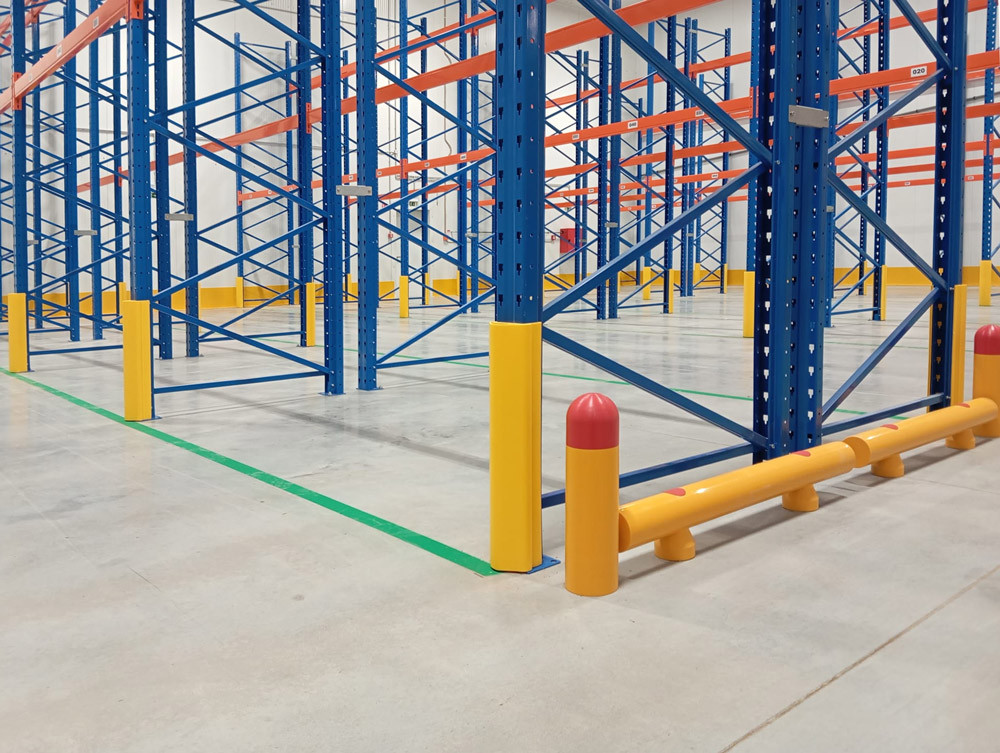
Protection of rack legs (uprights and footplates)
Rack uprights suffer during pallet placement, when moving through a narrow aisle, or when the load overhangs. Frequent small impacts around the footplates can gradually damage the most sensitive part of the rack – the transfer of load into the floor.
Rack leg protectors create an impact zone at the level where trucks most often come into contact with the structure. They reduce the risk of upright deformation and limit the need for repairs.
When it makes sense:
- narrow aisles, frequent pallet repositioning
- warehouses with a high share of busy intersections near racking
- areas with a higher risk of side contact with the rack
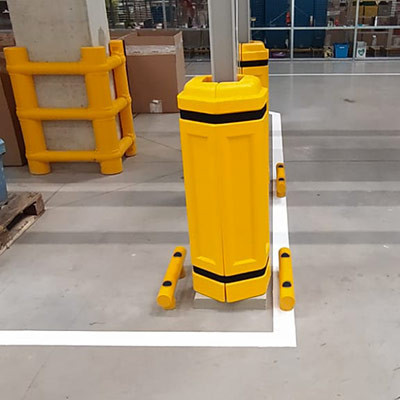
Protection of hall columns and critical infrastructure near racking
A column near a rack aisle is often a 'critical point' – an impact can mean an expensive repair and operational complications. Column protection is especially practical at route crossings, aisle entrances, and areas with poorer visibility.
Safety railings for guiding trucks and protecting rack aisles
In some warehouses it is not enough to protect only the racks – it is crucial to guide the equipment along the correct path. Safety railings help separate the forklift route from the racks and stabilize passage, especially at aisle entrances, route crossings, and long straight sections.

Why one barrier is not the same as another
The protective element must withstand an impact without coming loose, damaging the floor, or transferring energy into the rack in an unwanted direction. Resistance, repeatability of behaviour during impact, and proper anchoring are essential.
With BAM | BARRIER solutions, the Rootlock® anchoring system and the emphasis on professional installation also play an important role. Thanks to this, the barriers stay in place in real operation and help reduce damage over the long term.
Testing and methodology
according to PAS13 / UNI standards
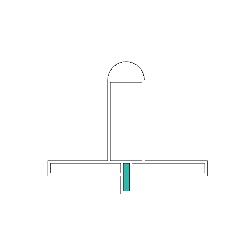
Rootlock® anchoring
floor-friendly, stable fixing
Installation and layout design
it is not just about "buying a piece"
How to choose the right rack protection
If you are not sure, start with these questions. They will help quickly determine which areas should be protected first.
What type of equipment is used in the warehouse (forklift / reach truck / tugger train)?
How often is manoeuvring carried out at aisle ends?
Are the aisles narrow and is there a risk of side contact with the rack?
Where do routes cross and where is visibility worse?
Which areas repeatedly suffer the most damage (ends / legs / columns)?
RECOMMENDATION BAM I BARRIER
Most often, protection starts with rack ends, followed by leg guards and column protection. In risky traffic routes, guide railings help.
Case example:
Protection of rack ends in a high-traffic zone
In one operation, repeated impacts occurred when entering the rack aisle. The first rack bays were most often damaged, with deformation occurring in the upright area. The solution was a combination of rack end protection and guide railings, which stabilized the entry path of the trucks.
Result:
fewer service interventions on racks in the exposed aisle
reduced damage to goods in the entry zone
smoother operation without repeated downtime
reduced costs for forklift repairs
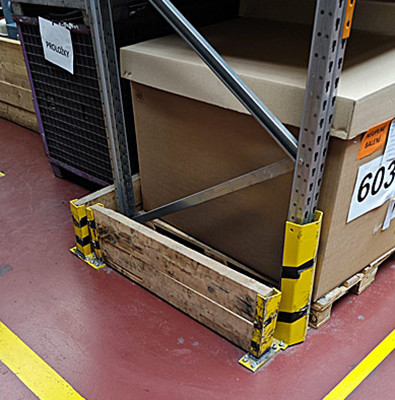
Unsuitable original condition
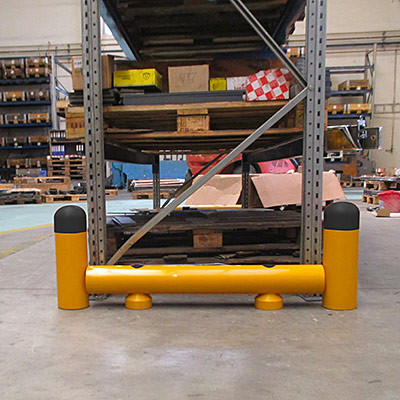
Correct solution BAM I BARRIER
Frequently asked questions
Is it necessary to protect racking if these are only small impacts?
Yes. Smaller impacts are the most common in warehouses, and their repetition is exactly what leads to gradual damage of uprights, footplates, and the stability of the rack.
Will barriers reduce aisle passability?
A correctly designed solution protects the racking while respecting the warehouse space. It is important to choose the right type of elements and their placement.
Is it possible to install protection during operation?
In most cases, yes. The procedure is chosen so that the impact on operations is as small as possible.
What is more important: rack end protection or rack leg protection?
It depends on the operation. In most warehouses, rack ends (aisle entry points) are the most exposed areas; afterwards, it makes sense to add upright protection in areas with side contact.
How is the solution designed?
Typically, we assess the risk areas (on-site or based on the provided materials), propose a combination of elements, and arrange installation.


