






Protection of Production Equipment and Operations
Production machines, lines and technological infrastructure are among the most expensive assets in an operation – and at the same time they are often within reach of material handling equipment. Impacts from forklifts, pallet trucks or tugger trains often occur during replenishment and manoeuvring in tight spaces. We will design a combination of protective elements to protect equipment, reduce downtime and avoid restricting material flow.


Where equipment is most often damaged by impact
The greatest amount of damage occurs during manoeuvring: turning, reversing, approaching a workstation, and transfers. In practice, it pays to protect above all the places where equipment moves repeatedly and where even a minor impact would mean an expensive repair or shutdown.

doors, passageways and narrow points in the hall
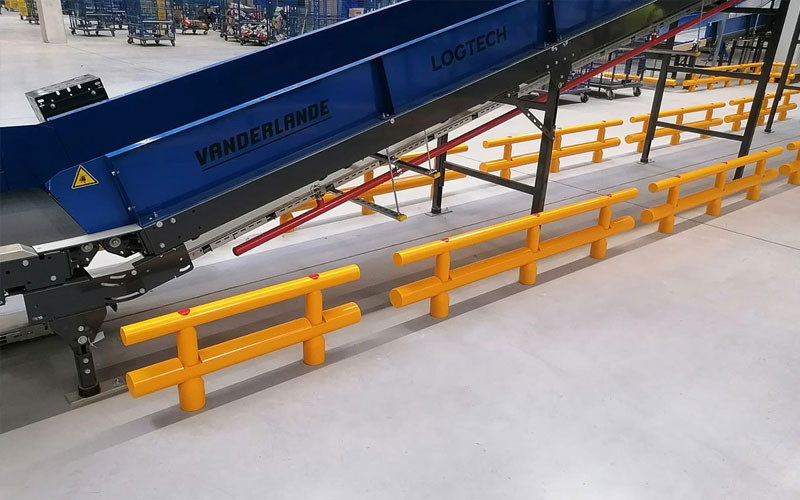
replenishment and storage areas next to production lines

switchboards, control panels, measuring and safety elements

machine corners and aisle exits (blind spots)

columns and structures along equipment routes

walls and built-in structures
What happens when equipment hits production assets
In manufacturing, downtime itself is the most expensive part. Even minor damage can mean a line stoppage, delayed deliveries and interruption of the process.
Worker safety
Impacts near lines and workstations can put workers at risk – machines and loads behave unpredictably. Protective elements help separate equipment routes from people and sensitive zones.

Damage to technology and production quality
Switchboards, sensors, cable routes, machine covers or measuring elements are sensitive. Damage often appears only later – faults, outages, poor quality.

Downtime and costs
Service, waiting for parts, maintenance intervention, line shutdown and logistics restrictions. Prevention through barriers and route guidance is usually cheaper than repeated repairs.
How we design production protection
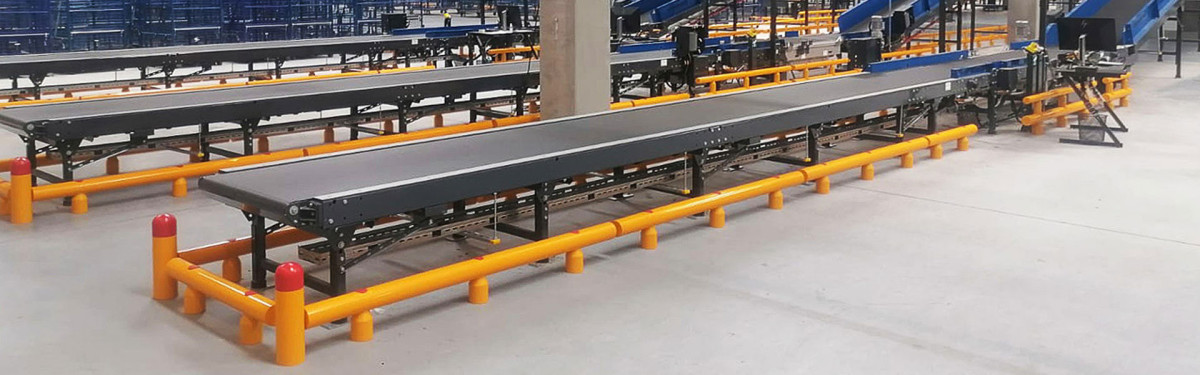
The best solution is created by combining: protection of critical points + route guidance + controlled access. We always adapt the design to the operation (equipment type, speeds, replenishment, space).

1. Operation analysis
equipment routes, replenishment points, critical assets, narrow points

2. Protection zones
machine corners, switchboards, columns, passageways, gates, pedestrian workstations

3. Design of the element combination
guardrails, barriers, panels, posts, gates
4. Installation and recommendations
additional markings, improved visibility, replenishment rules
 Products button anchor
Recommended BAM I BARRIER
products for production protection
This is not about one single “barrier piece”. Most operations combine machine and infrastructure protection with route guidance for material handling equipment.
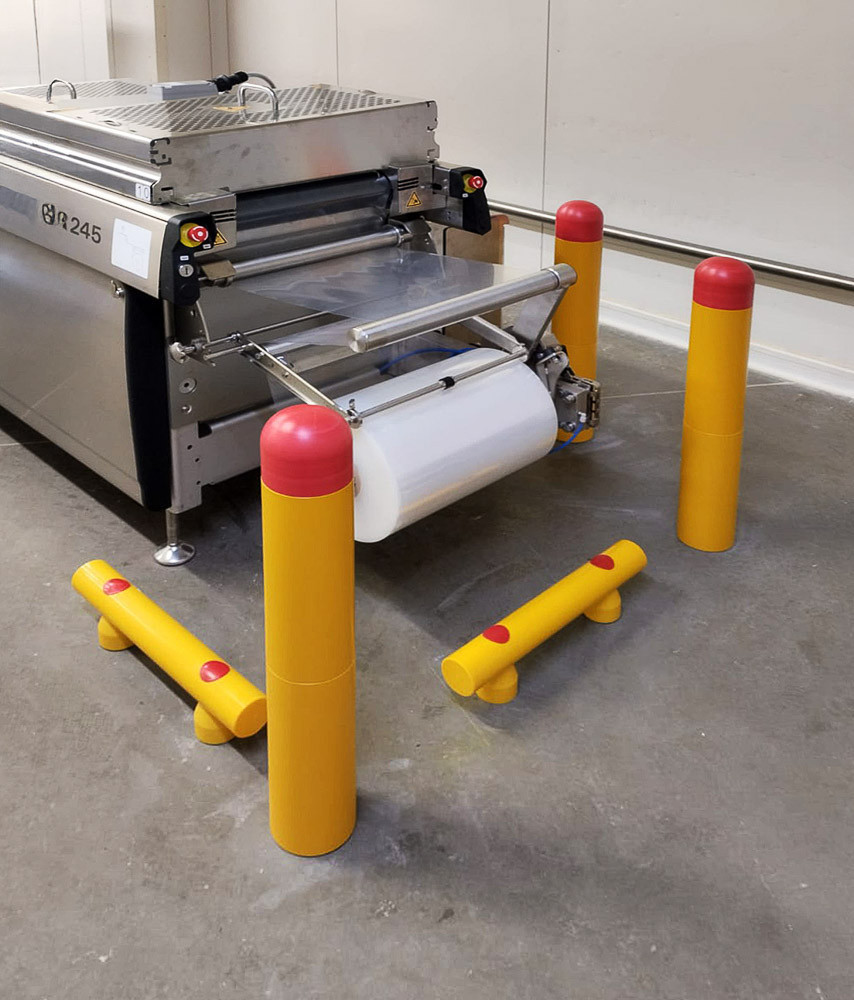
Protection of machines and production lines in replenishment areas
Line corners and replenishment points are usually the most exposed. Barriers at these points act as an impact zone between the equipment and the machine – protecting covers, structure, sensors and safety elements.
They are suitable wherever pallet arrival and millimetre-precise manoeuvring are repeated.
Benefits:
- protection of critical machine parts from impact
- reduced risk of line shutdown
- suitable for tight spaces and workstations
Guardrails for guiding equipment routes and protecting workstations
Guardrails help keep material handling equipment within a defined path while also protecting surrounding assets – for example service zones, workstation edges and corridors along production lines. In practice, simply “guiding” the vehicle correctly is often enough to stop repeated impacts.
When to use:
- logistics corridors along production areas
- places where equipment repeatedly approaches assets
- separating pedestrian movement from replenishment


Safety gates for controlled passage and entry into risk zones
In production environments, operators often need to cross a logistics route or enter a replenishment area. A gate creates a controlled point and increases attention when entering – a complement to guardrails and pedestrian route marking.
Protection of columns and corners near production areas
Columns near machines and equipment routes are a frequent impact point. Column protection helps prevent structural damage while also protecting the space around workstations.


Protective panels for walls and sensitive surfaces
Protective panels shield walls and surfaces wherever equipment operates at minimal distance from walls or where there is a risk of contact with the load.
Why physical equipment protection pays off in production
Markings and rules are important, but during peak operation physical prevention makes the difference. Protective elements reduce the number of incidents over the long term (not “just in the week after training”), protect expensive equipment and critical points (switchboards, corners, columns), and help maintain smooth material flow without improvisation
Downtime prevention
Protection of sensitive components
Route guidance without restricting operations
How to choose protection for a production operation
If you are not sure, start with these questions. They will help quickly determine which places to protect first.
Where do repeated impacts occur (corners, switchboards, doors, passageways)?
Is the problem in manoeuvring (turning, reversing) or in replenishment?
Which assets would stop production if damaged (critical line, robot, switchboard)?
Can the equipment be guided along a route (guardrail), so that it does not come close to the assets??
Where is controlled pedestrian access needed (gate)?
RECOMMENDATION BAM I BARRIER
Start with the places that have the greatest impact on downtime - line corners, switchboards and areas for storing pallets with material. Then add route guidance with guardrails and protect columns and passageways.
Example from practice:
Protection of a line corner and switchboard in a replenishment zone
In the replenishment zone next to the line, repeated forklift contact occurred during pallet delivery. The line corner and the switchboard close to the passageway suffered the most. The solution was a combination of a barrier at the line corner, protective panels by the switchboard, and route guidance with guardrails so that the truck would not leave its path.
Result:
fewer incidents in the replenishment zone
reduced service interventions on equipment
more stable and smoother replenishment
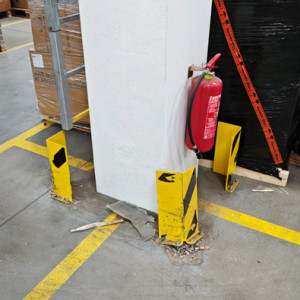
Unsuitable original condition

Correct solution BAM I BARRIER
Frequently asked questions
What should be protected first if the budget is limited?
Start with the places that have the greatest impact on downtime: line corners, switchboards, areas for storing pallets with material, and passageways near equipment. Then add route guidance with guardrails.
Will the protection obstruct replenishment?
Properly designed elements do not block replenishment – on the contrary, they help keep equipment on a defined path and reduce the risk of manoeuvring errors.
Can it be installed during operation?
In most cases yes – usually in stages, outside peak times or by zones.
How quickly will we know what we need?
A floor plan, photos and a description of the routes are enough. We will recommend the elements and their placement.


